Proper shirt care: Washing, Drying, Ironing & Storage
Premium shirts are an investment – proper care significantly extends their lifespan. Although shirts wear out through normal use, you can ensure your RIESENHEMD Hamburg shirts look like new for as long as possible through careful treatment.
Understanding shirt lifespan
Realistic Expectations: Initial wear marks appear from the 15th wash onwards; after 30 wash cycles, virtually all shirts show signs of wear (Stiftung Warentest). Proper care, however, can significantly extend this period.
RIESENHEMD Hamburg Advantage: All our fabrics are sanforized – a natural finishing process that prevents shrinkage during washing.
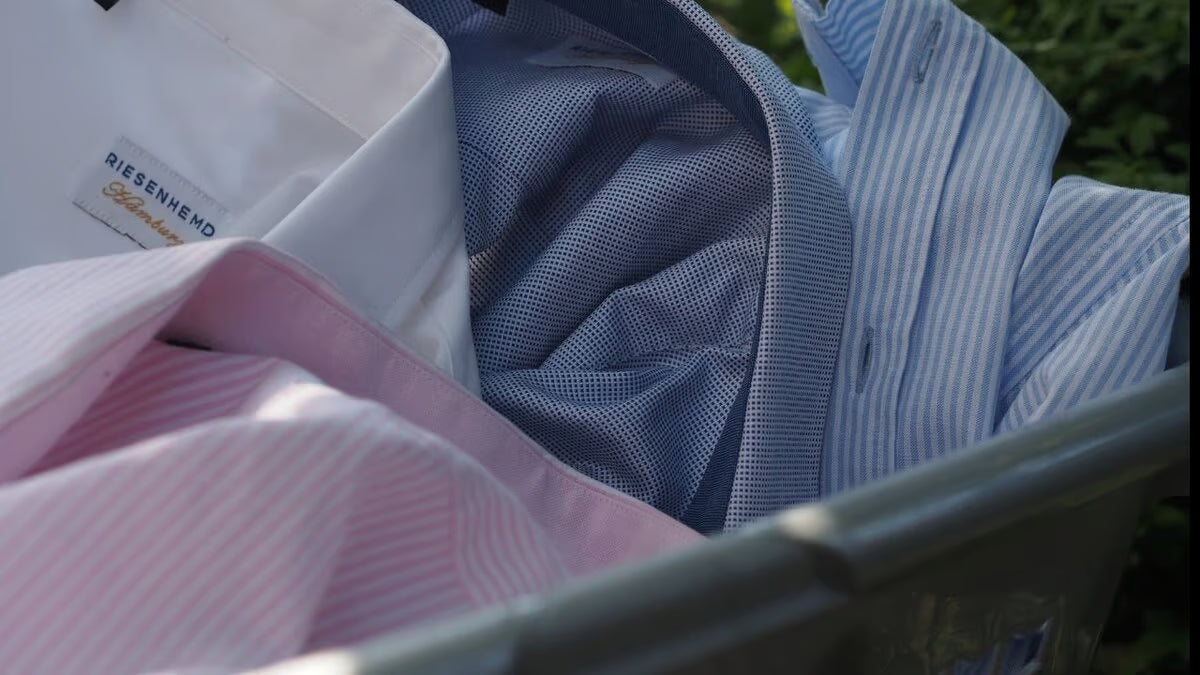
Washing & Drying – With Care
Before starting the wash cycle: Sort shirts by color (white, colored, dark), pre-treat stains on collars or cuffs, and remove collar stays to prevent damage
Use an appropriate detergent, load no more than 5–7 shirts per cycle, and wash at max. 40°C with a gentle spin cycle (600–800 rpm) – ideal for protecting textiles and preventing graying
After washing, immediately shake out shirts and hang on hangers, preferably in fresh air – never use the dryer! Moisture in the fabric makes ironing easier later, without unnecessary creasing
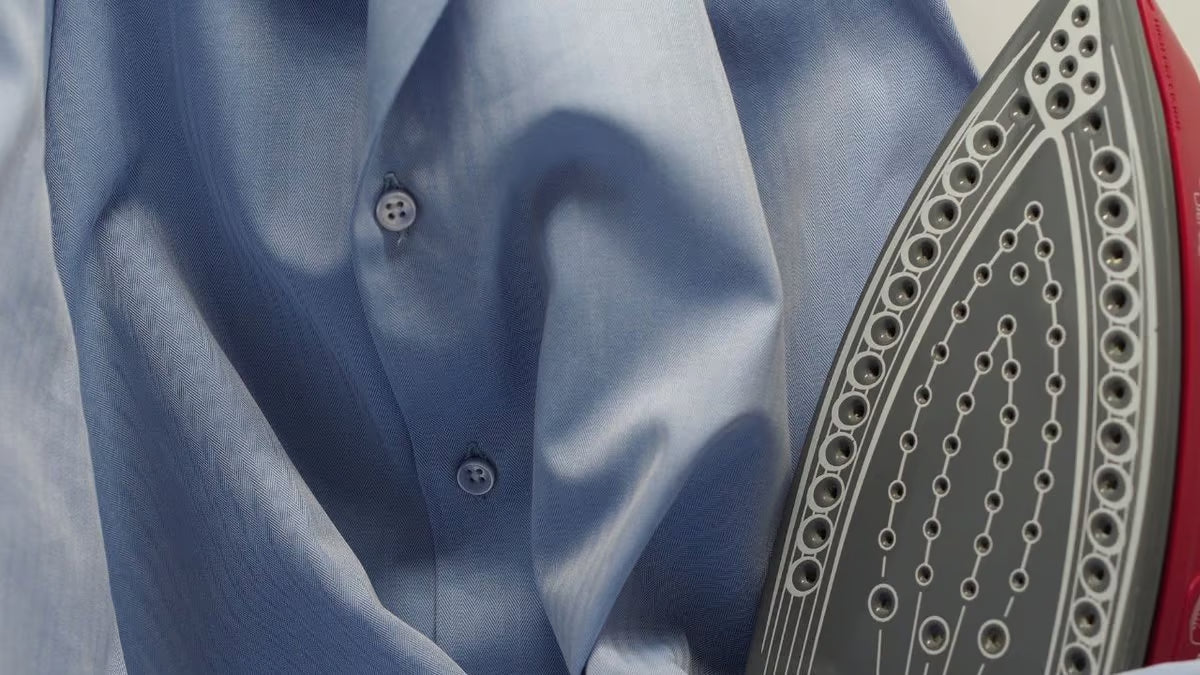
Ironing – Step by Step
Optimal: Iron shirts while slightly damp, preferably using an iron and steam station. Start with the collar (iron smooth on both sides), then the cuffs (outside, inside, sleeve opening if needed), sleeves, shoulder area, front and back
Always observe the care label: Select temperature according to material. If necessary, start with lower heat and work your way up as needed – always keep the iron moving to avoid fabric damage
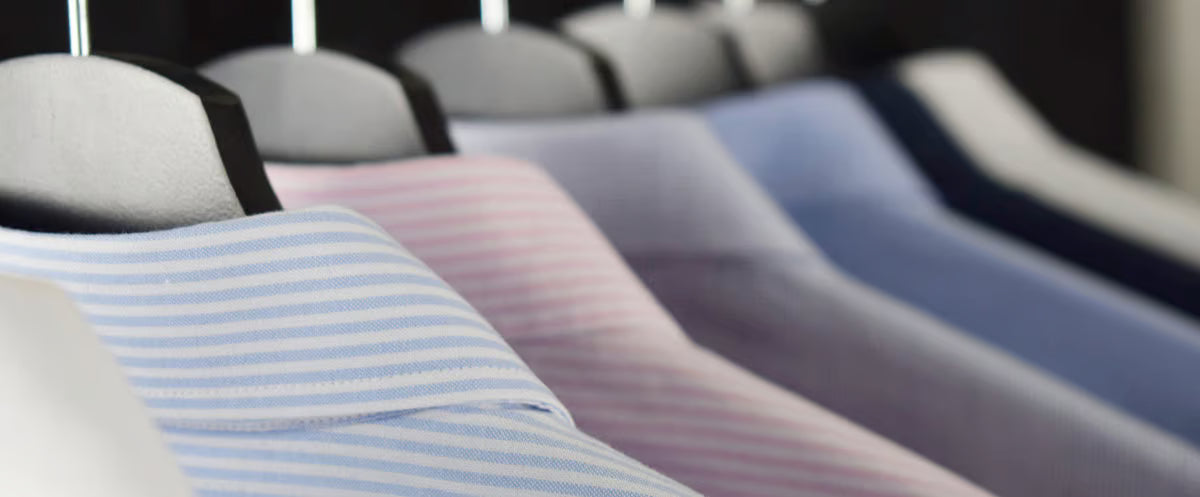
Storage & Keeping
Hang freshly ironed shirts on slim wooden hangers, with some space between other garments – this prevents pressure marks on the collar and creasing. When storing folded shirts in the closet, use thin tissue paper between layers
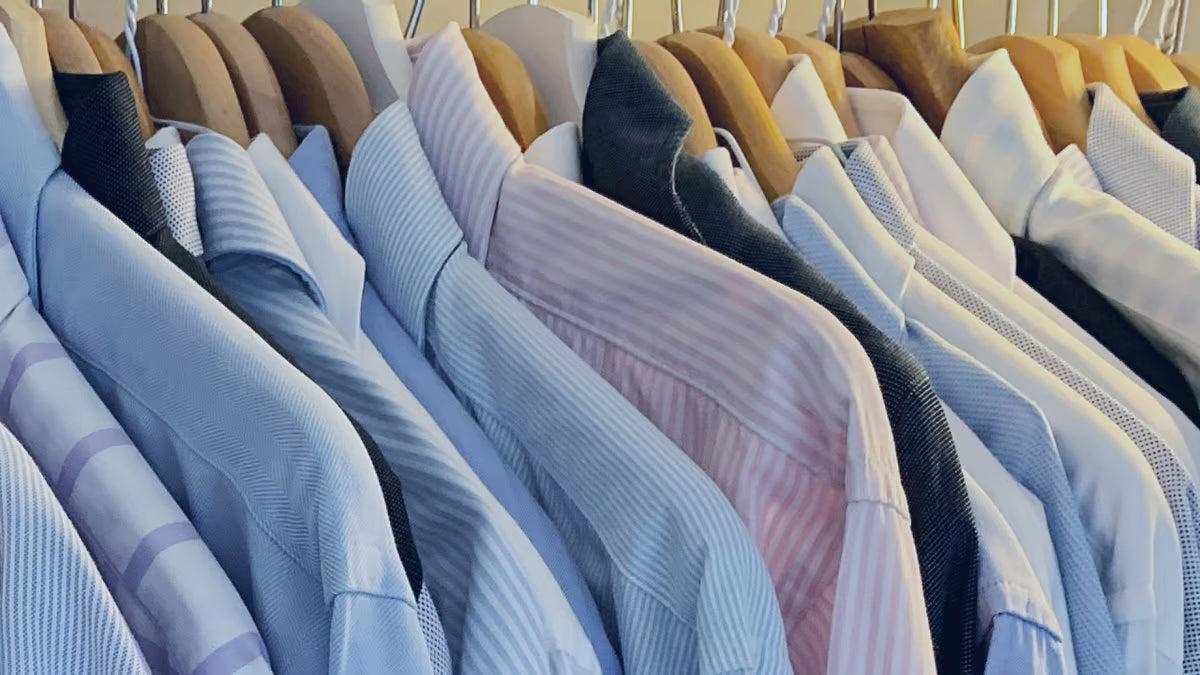
Sorting Out Shirts Properly
At least once a year, it's worth doing a spring cleaning in your wardrobe: Keep only shirts that fit well, that you like, and that are in perfect condition.
If a shirt is too tight, looks worn out, or you simply don't like it anymore, it's time to take action: Repair, alteration by a tailor, donation, or upcycling are better alternatives to throwing it away