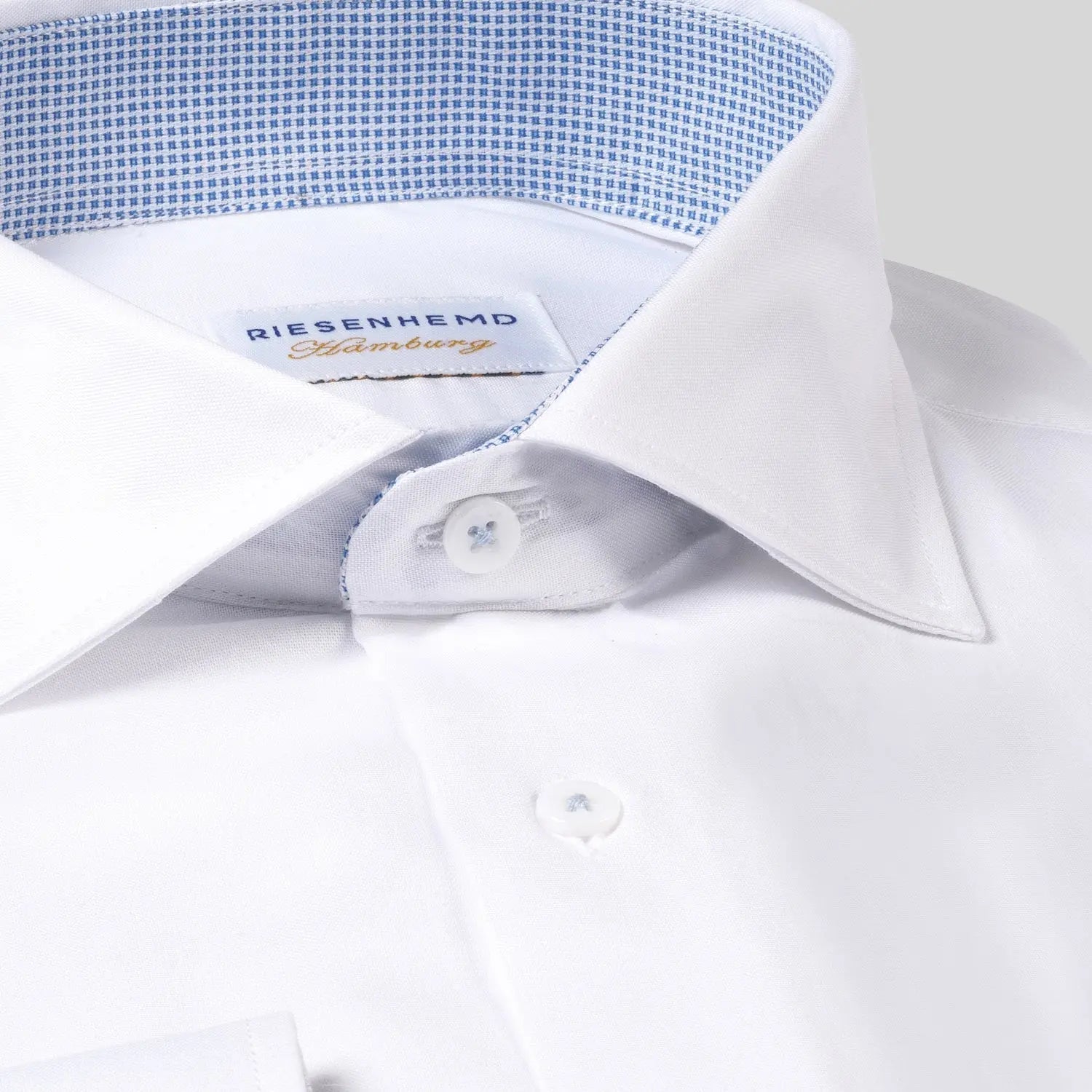
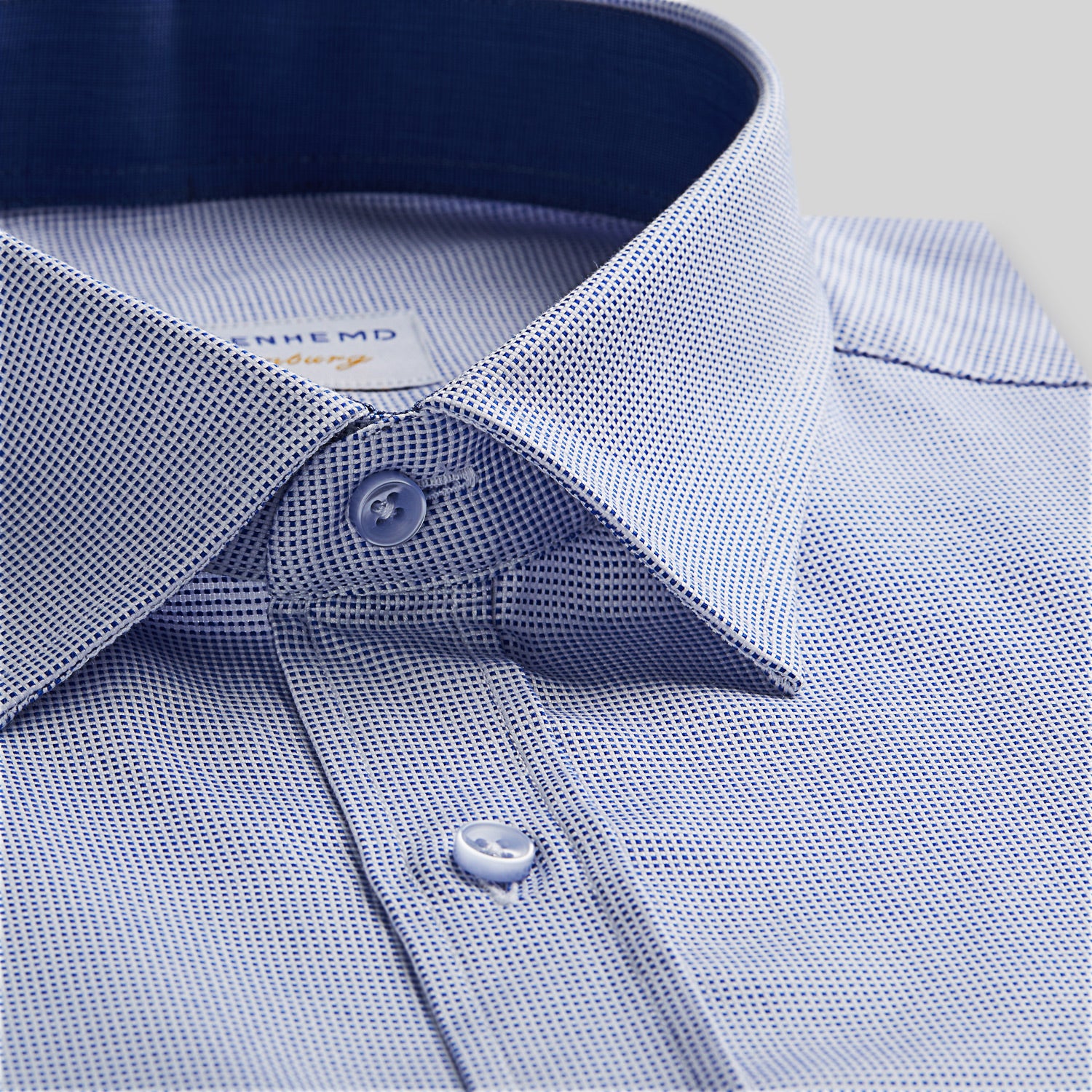
When washing a shirt, the surface becomes rough due to fibers loosening from the fabric, and the shirt wrinkles. Fortunately, shirts can be ironed, because using heat and moisture makes the shirt smooth and presentable to wear again. But how do you iron well and efficiently (because ironing is only moderately enjoyable)? And how do you fold a shirt afterwards if you can't store it hanging on a hanger?
Here are a few tips from RIESENHEMD Hamburg on ironing and storing men's shirts, so you can enjoy wearing them more.
How to Properly Iron Men's Shirts
First: Ironing heat literally burns stains and sweat residue into the fabric, so you should only iron clean, ideally freshly washed clothing. If possible, don't let the shirt dry completely, as it irons better when slightly damp. If the shirt is too dry, you'll need to moisten the shirt with a spray bottle and ideally let it rest in a plastic bag for a few minutes.
When ironing: Always move the iron in the direction of the grain, anything else distorts the fabric. You'll achieve better results if you iron with the steam function. Pull the shirt taut while ironing. Use the correct temperature when ironing, follow the manufacturer's recommendations.
Here's our suggested sequence for ironing a shirt:
- Start with one of the sleeves. Iron them from inside to outside. The edges are ironed last. For a button cuff, the buttons should be facing up when ironing. For a French cuff or double cuff, make sure the buttonholes lie flat on top of each other. If you have an ironing board, you can iron the sleeves round. Don't iron the cuffs for too long.
- Then iron the shoulders, using the tip of the ironing board for this.
- Next, iron the collar from the points inward and not for too long. Iron both sides. If the collar has collar stays, remove them for ironing and insert them again after ironing.
- Then iron the back panel; here make sure that the back pleats are ironed in evenly.
- Finally, iron the front of the shirt. Make sure to iron around the buttons.
Non-iron and easy-iron shirts come out of the washing machine much smoother, but usually still need to be ironed. Ironing is somewhat easier here; a shirt should be fully ironed in about 3-4 minutes. A regular cotton shirt takes a few minutes longer, depending on the fabric.
Should you therefore always only buy "non-iron" and "easy-iron" shirts? That's a matter of taste. "Non-iron" involves a special, elaborate sealing process for the fabric; here the cotton fibers are treated with synthetic resin using ammonia. With "easy-iron," the shirt is sealed through strong heating, called dry cross-linking. A shirt made from 100% cotton without either of these two treatment methods is, in contrast, significantly more breathable because the surface is not sealed with synthetic resins or heat; this means you sweat less or sweat is better wicked outward.
How to Properly Store Men's Shirts
Shirts are best stored hanging. If you want to fold them, let them cool for 30 minutes after ironing. When folding, first close the buttons and then lay the shirt face down. Fold the shirt at half the shoulder, then fold it down with the sleeve. When you've done this on both sides, the shirt should have the shape of a long rectangle. Then fold the lower part of the shirt body over the cuffs and fold it one last time; now the lower part of the rectangle should rest at the collar.
We hope that these tips on ironing and folding will help you enjoy your shirts for as long as possible.